

Shoulder impingement, most often referred to as subacromial impingement syndrome, involves compression of structures between the humeral head and the acromion during arm elevation. The tissues most commonly affected are the supraspinatus tendon, portions of the infraspinatus tendon, the long head of the biceps tendon, and the subacromial bursa.
Clinical studies consistently show that this compression is rarely caused by bone shape alone. Poor scapular upward rotation, reduced posterior shoulder mobility, and delayed rotator cuff activation play a larger role in most non-traumatic cases.
Epidemiological data from orthopedic clinics show that shoulder impingement accounts for roughly 44 to 65 percent of shoulder pain presentations in adults.
The highest incidence appears in people aged 35 to 65, particularly those with repetitive overhead activity, such as construction workers, painters, swimmers, and recreational gym users who perform frequent pressing or overhead lifting.
Why Exercise Choice Matters More Than Exercise Quantity
Exercise is the primary conservative treatment for shoulder impingement. Large randomized trials comparing surgery to structured exercise programs show that targeted rehabilitation produces equal or better outcomes at 6 to 12 months in most patients. However, the type of exercise matters more than volume or effort.
Exercises that improve scapular positioning and humeral head control reduce subacromial pressure. Exercises that increase the anterior glide of the humerus or force internal rotation under load increase compression and irritation.
A common clinical mistake is continuing general shoulder strengthening while pain persists. Strong muscles do not compensate for poor movement patterns. In impingement, the wrong strengthening can worsen symptoms even as strength improves.
Exercises That Consistently Help Shoulder Impingement
Scapular Control And Upward Rotation
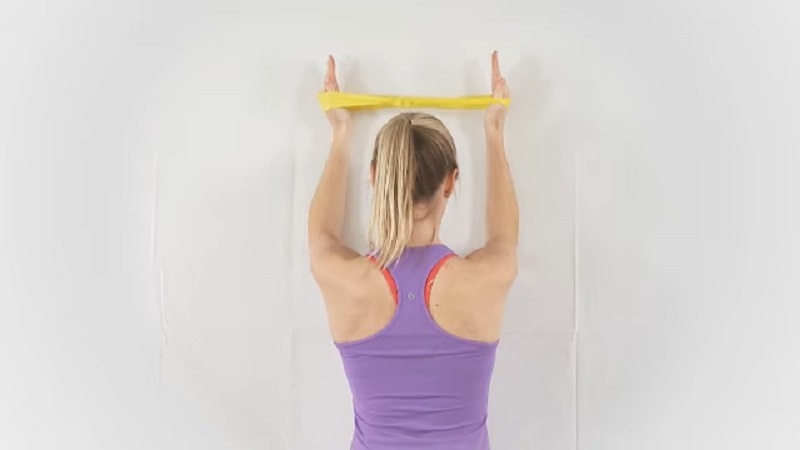
Exercises that improve scapular motion are central to impingement recovery. The scapula must upwardly rotate, posteriorly tilt, and externally rotate during arm elevation. When it does not, the humeral head migrates upward and narrows the subacromial space.
Wall slides with a resistance band around the wrists encourage serratus anterior activation while limiting upper trapezius dominance.
When performed correctly, these exercises improve scapular kinematics without loading the shoulder joint aggressively.
Electromyography studies show higher serratus anterior activation during wall slides compared to traditional shoulder raises, with lower supraspinatus compression.
Rotator Cuff Strengthening In Neutral Positions
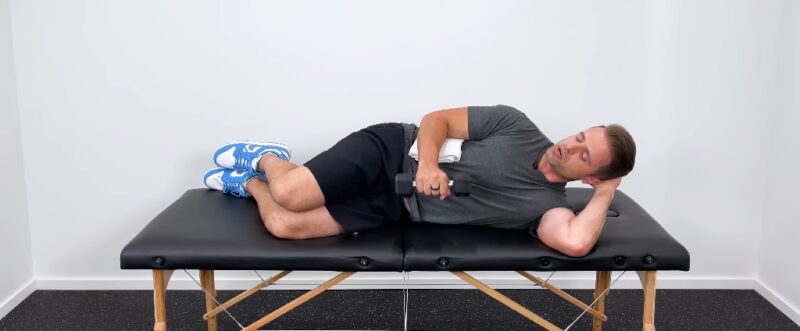
Side-lying external rotation and standing band external rotation with the elbow at the side strengthen the infraspinatus and teres minor while minimizing subacromial compression. These muscles act as dynamic stabilizers, countering upward humeral head migration during arm elevation.
Clinical guidelines recommend starting rotator cuff work below shoulder height, using low loads and high control. Pain during these exercises is not required and often counterproductive. Studies indicate that rotator cuff endurance, rather than maximal strength, correlates more strongly with symptom reduction in impingement patients.
Posterior Shoulder Mobility Work
Tightness in the posterior capsule shifts the humeral head forward and upward during elevation. This increases compression under the acromion even when strength is adequate.
Controlled cross-body stretching and posterior capsule mobilization reduce this effect.
Research published in sports medicine journals shows that restoring posterior shoulder mobility can reduce pain and improve range of motion within four to six weeks, even without aggressive strengthening.
Thoracic Spine Mobility
Thoracic extension is often overlooked in shoulder pain. Limited upper back extension forces the shoulder to compensate during overhead movement, increasing impingement risk. Simple thoracic extension drills over a foam roller or bench improve overhead mechanics indirectly by allowing better scapular positioning.
Exercises That Commonly Worsen Shoulder Impingement
Upright Rows And High Pulls
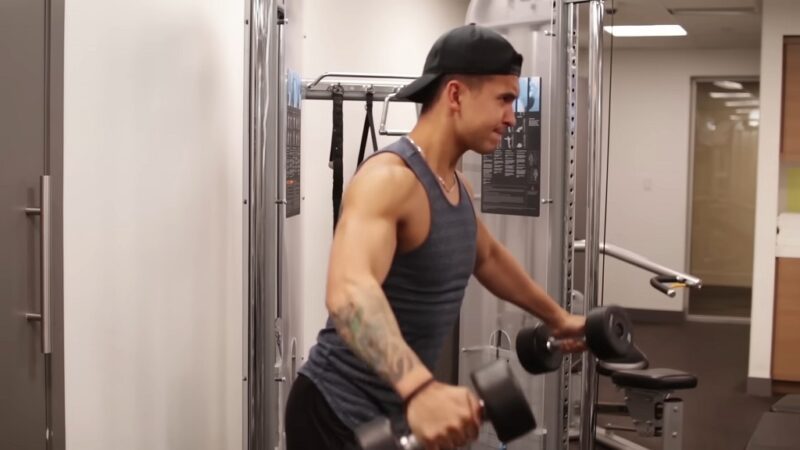
Upright rows combine shoulder abduction with internal rotation, a position known to maximize subacromial compression. Biomechanical studies measuring joint space show the smallest subacromial distance during this movement pattern. Even light loads can aggravate symptoms, especially when performed above chest height.
Overhead Pressing With Poor Scapular Control
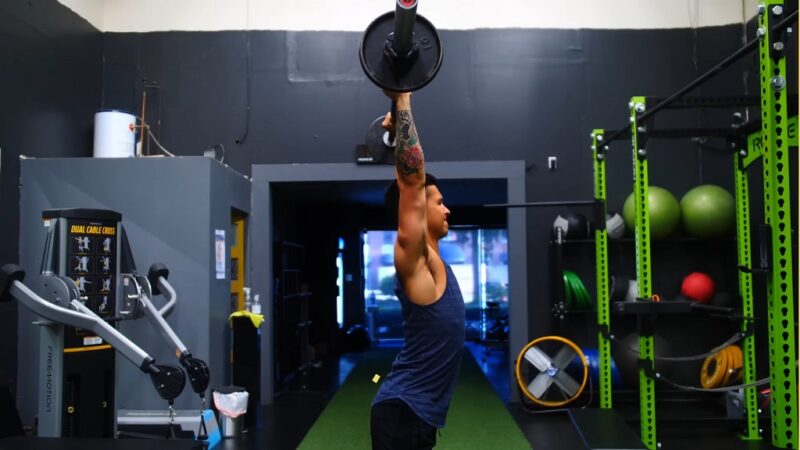
Overhead pressing is not inherently harmful, but during active impingement, it often worsens pain. Limited upward rotation, thoracic stiffness, or fatigue causes the humeral head to glide upward under load. This is why many people report pain at the bottom or midpoint of the press.
Clinical data show that temporarily removing overhead pressing during early rehabilitation improves outcomes, especially in individuals with daily overhead work exposure.
Behind The Neck Movements
Behind-the-neck presses and pulldowns place the shoulder in extreme external rotation and abduction. This position increases strain on the anterior capsule and compresses subacromial structures. These movements offer no rehabilitation advantage and carry a higher injury risk, particularly in individuals with existing shoulder pain.
Deep Dips And Extreme Range Push Ups
Dips load the shoulder in extension, combined with internal rotation. This places high stress on the anterior shoulder and biceps tendon, both commonly involved in impingement. Even pain-free individuals often develop symptoms with repeated dip training.
Helpful vs Harmful Exercises
| Category | Generally Helpful | Commonly Worsening |
| Scapular work | Wall slides, serratus punches | Shrugs under load |
| Rotator cuff | Side-lying external rotation | Heavy internal rotation at 90 degrees |
| Pressing | Landmine press in pain-free range | Overhead barbell press |
| Pulling | Chest supported rows | Upright rows |
| Mobility | Posterior capsule stretch | Aggressive static stretching into pain |
Load, Volume, And Pain Threshold Considerations
Pain during exercise is not a reliable indicator of tissue damage, but persistent pain after training is a strong predictor of poor outcomes in shoulder impingement. Most rehabilitation protocols recommend keeping pain during exercise at or below 2 out of 10, with no symptom escalation lasting longer than 24 hours.
Progression should be based on control and symptom response rather than resistance increases. Research comparing high-load and low-load rehabilitation found similar outcomes when movement quality was prioritized.
Just as clinicians avoid relying on pain alone as a signal of tissue damage, many editors now verify technical rehabilitation content with an AI content detector to ensure the material reflects structured reasoning rather than surface-level pattern repetition.
Timeline Expectations And Recovery Data
Clinical recovery timelines vary. Mild cases often improve within six to eight weeks of structured exercise. Moderate cases typically require three to six months. Long-term follow-up studies show that patients who complete scapular-focused rehabilitation have lower recurrence rates than those who rely on rest or injections alone.
Corticosteroid injections may reduce painshort-termm, but do not improve long-term outcomes when used without exercise. In some studies, repeated injections were associated with tendon degeneration over time.
Common Mistakes In Shoulder Impingement Exercise Programs
| Mistake | Consequence |
| Training through sharp pain | Increased inflammation |
| Prioritizing strength over control | Persistent compression |
| Ignoring thoracic mobility | Limited overhead recovery |
| Continuing overhead lifting too early | Delayed healing |
| Treating both shoulders identically | Missed asymmetries |
When Exercise Alone Is Not Enough
A small percentage of patients do not respond to conservative care.
Structural rotator cuff tears, significant acromial spurs, or neurological involvement require imaging and specialist evaluation.
However, even in surgical candidates, prehabilitation improves postoperative outcomes and reduces recovery time.
Closing Perspective
Shoulder impingement improves when exercises restore normal shoulder mechanics rather than simply strengthening the joint.
Movements that promote scapular control, rotator cuff endurance, and thoracic mobility reduce compression and allow irritated tissue to recover. Exercises that repeatedly force the shoulder into internally rotated or poorly controlled overhead positions prolong symptoms and delay recovery.
The difference between improvement and worsening is rarely effort. It is almost always exercise selection and execution.